The backup principle
Payment problems while travelling are rarely dramatic. More often a small restaurant does not take cards, a terminal rejects a foreign card for no clear reason, or your bank's fraud system blocks a transaction at night. Each of these is easy to handle if you already have a second option in your pocket. Our suggested minimum is two bank cards on different networks, such as one Visa and one Mastercard, kept in separate places, plus enough local cash for a day or two.
Before you leave home
Tell your bank where and when you are travelling if it still asks for that, and make sure its app works abroad so you can approve payments. Check the foreign transaction fee on each card; some charge a percentage on every purchase. Multi-currency cards and accounts from providers such as Wise or Revolut are popular with travellers because they can show fees clearly, but read their terms on ATM withdrawals.
When a card terminal or ATM offers to charge you in your home currency, choose the local currency. The home-currency option, called dynamic currency conversion, usually applies a less favourable exchange rate.
Japan
Card acceptance in Japan has grown quickly, and contactless Visa and Mastercard payments are common in chain stores, hotels and department stores. Yet cash still matters in small family restaurants, some temples and shrines, rural buses and market stalls. Your transit IC card, such as Suica, also pays at convenience stores, vending machines and many station shops, which makes it a handy everyday wallet.
For cash, ATMs at 7-Eleven stores (Seven Bank) and Japan Post Bank post offices reliably accept foreign cards and offer English menus. Many bank-branch ATMs do not. Domestic QR payment apps such as PayPay are mostly designed for residents, so do not plan around them.
Mainland China
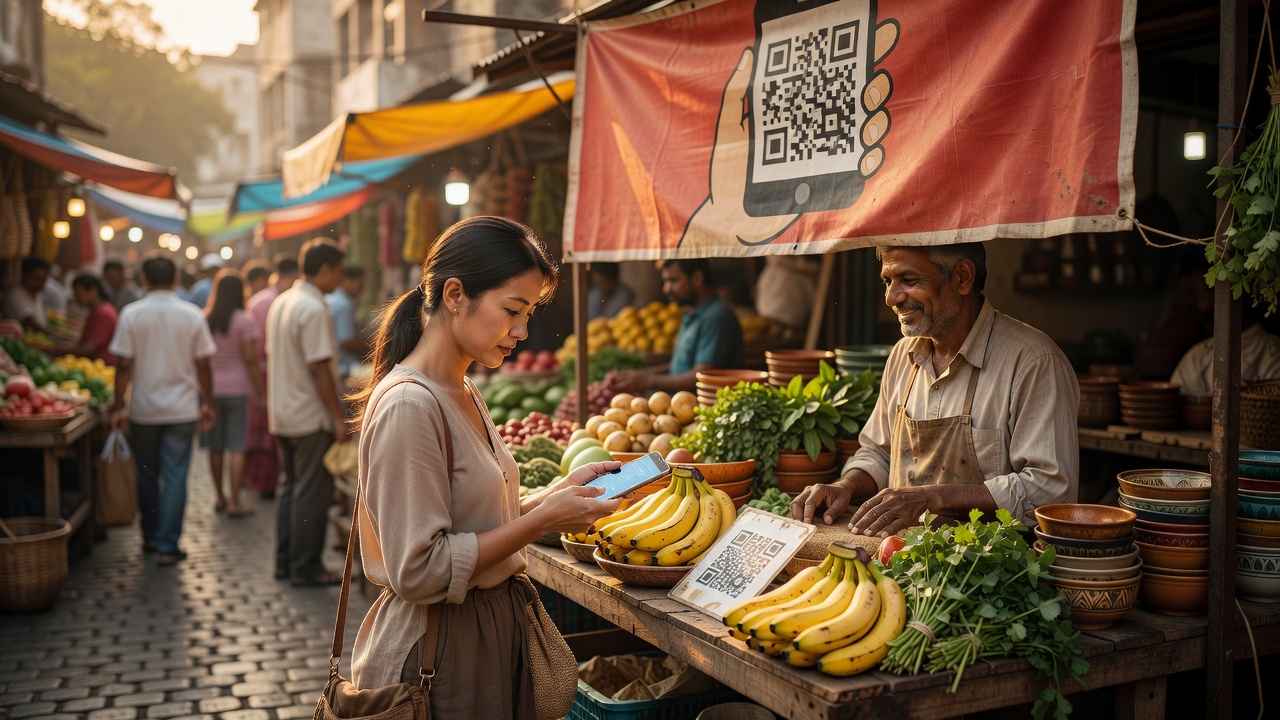
Daily life in mainland China runs largely on Alipay and WeChat Pay. Both now let visitors link foreign Visa or Mastercard cards, and many travellers find this the most practical way to pay in shops, restaurants and for metro rides. Set up and verify your account at home, as identity checks can take time. Small fees may apply above certain amounts, so check the current terms in each app. Keep some yuan in cash and a physical card for hotels.
South Korea, Hong Kong, Taiwan and Southeast Asia
South Korea accepts cards almost everywhere, including taxis. Transit uses T-money, which you top up with cash at convenience stores; prepaid cards for visitors, such as WOWPASS, combine currency exchange with a payment card. In Hong Kong, the Octopus card pays for transit and small purchases, and contactless bank cards are widely accepted. Singapore is close to cashless in daily life. In Taiwan, an EasyCard covers transit and convenience stores, while night markets lean towards cash. In Thailand and Vietnam, cards work well in malls and hotels, but street food and markets generally expect cash, and local QR systems such as PromptPay are mainly for residents with local bank accounts.
Two cards on different networks, stored apart, and enough cash for one quiet day. That is the whole backup plan.
Keeping payments secure
Add your cards to Apple Pay or Google Pay where supported; tapping a phone keeps the physical card in your bag. Use ATMs inside stores or banks rather than standalone street machines, and cover the keypad. Save your bank's international emergency phone number in your contacts and on paper, so you can freeze a lost card quickly.
Caveat: wallet support varies by card issuer
Not every bank supports Apple Pay or Google Pay in every country, and some terminals in Asia accept physical contactless cards but not phone wallets. Carry the physical card too.
Caveat: ATM withdrawal limits
Both the ATM operator and your bank may cap single withdrawals and daily totals. Withdraw larger amounts less often to reduce per-transaction fees.
Desk tip: on arrival day, withdraw a modest amount of cash at the airport or the first convenience store. It covers the moment when a card unexpectedly fails.